CROSSING SHIFT Eduardo Paolozzi in dialogo con Gian Mario Conti, Roberto Franchitti, Elaine Shemilt. Angevin Castle, Gaeta, Italia. July 10-26 July, 2026
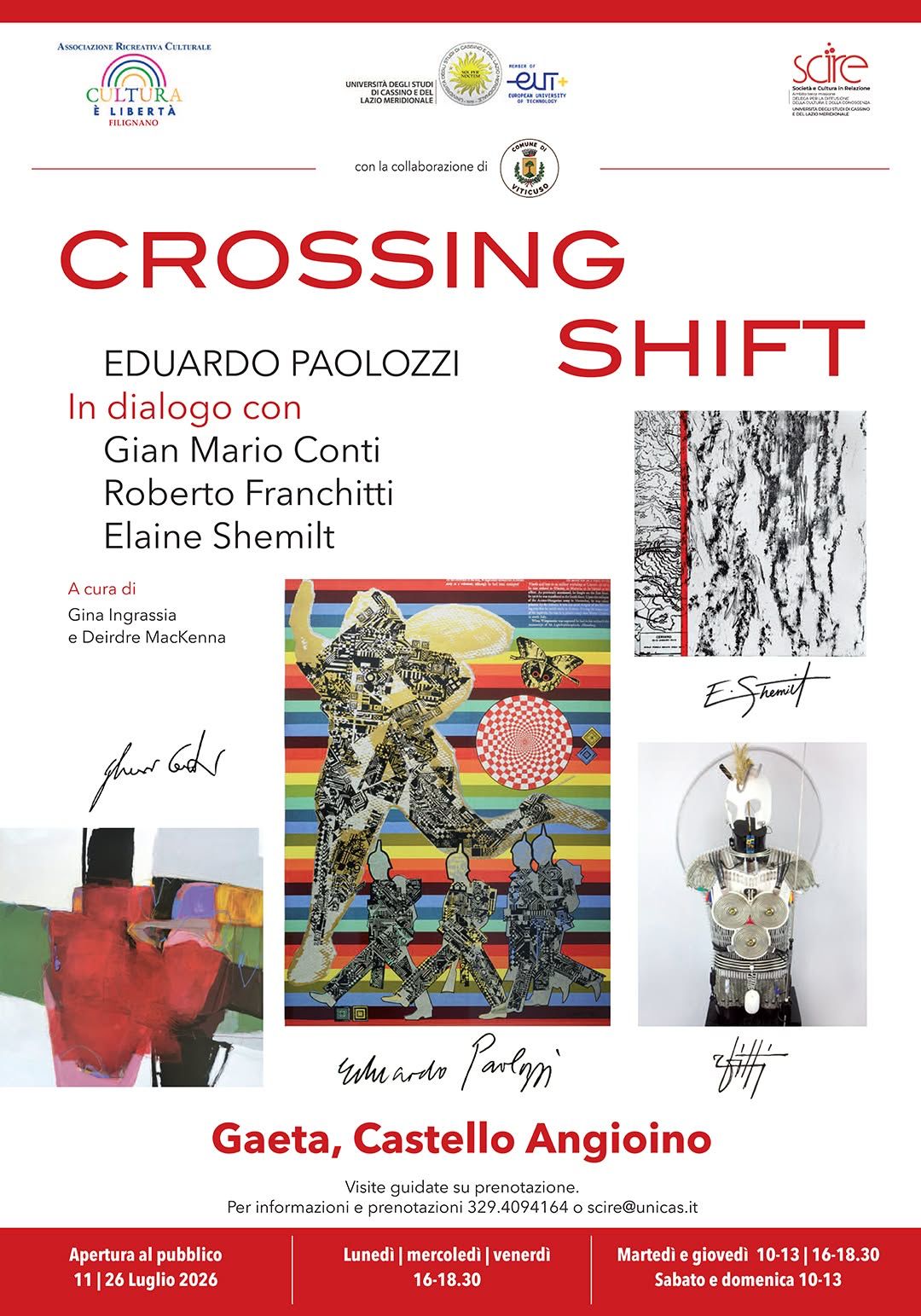
CROSSING SHIFT ‘ Eduardo Paolozzi in dialogo con Gian Mario Conti, Roberto Franchitti, Elaine Shemilt. Angevin Castle, Gaeta, Italia. July 10-26, 2026
From July 10 to July 26, 2026, the Crossing Shift group exhibition will be held at the Angevin Castle in Gaeta—a prestigious venue of the University of Cassino and Southern Lazio. Organized and supported by the *Cultura è Libertà* Association (based in Filignano), the event is held under the patronage of the University of Cassino and in collaboration with the Municipality of Viticuso and the Paolozzi Pop Art Museum. Curated by Gina Ingrassia and Deirdre MacKenna, the exhibition fosters a dialogue between the works of Eduardo Paolozzi—a key figure in British Pop Art—and those of Gian Mario Conti, Roberto Franchitti, and Elaine Shemilt. Featuring nearly fifty works by four artists within a site-specific project set in a location of great historical significance to Italy, the exhibition centers on themes of transformation, memory, and freedom. This initiative is part of a broader program of public engagement and the promotion of cultural heritage and contemporary art forms, spearheaded by the University’s Office for the Dissemination of Culture and Knowledge (SCIRE), represented by Professor Ivana Bruno. It reaffirms the Angevin Castle as a prime venue for cultural production, interdisciplinary dialogue, and the fostering of connections between art, research, and the community. The exhibition is housed in the Chapel of San Teodoro, an ancient 10th-century structure within the monumental complex. Here, the interplay of architecture, memory, and contemporary art creates a journey that invites visitors to symbolically traverse the transition from confinement to rebirth, from closure to openness, and from memory to the possibility of viewing the present through a new lens. For decades, the Castle served as a place of confinement and control; Today, returned to the community, it has been transformed into a place for meeting, learning, and freedom of expression—”a site of extraordinary historical layering that, thanks to a process of revitalization and opening up to the public, has gradually become an academic space for gathering, research, cultural production, and participation,” writes Marco dell’Isola, Rector of the University of Cassino and Southern Lazio, in his catalogue introduction. It is precisely this metamorphosis that lies at the heart of the curatorial project. A central figure of the exhibition is Eduardo Paolozzi, Eduardo Paolozzi – Wittgenstein the Soldier, 1964 an artist whose personal history resonates deeply with the location and the themes addressed by the project. The son of Italian immigrants to Scotland, he experienced internment during the Second World War. In his work, the trauma of war, loss, and displacement translates into a constant tension between fragmentation and reconstruction, between memory and the future. “In his images and sculptures, Paolozzi told us that the allure of superficiality can mask and conceal the madness of a world shaped by intense labor, consumerism, mass media, and conflict,” writes Deirdre MacKenna, the exhibition’s co-curator.
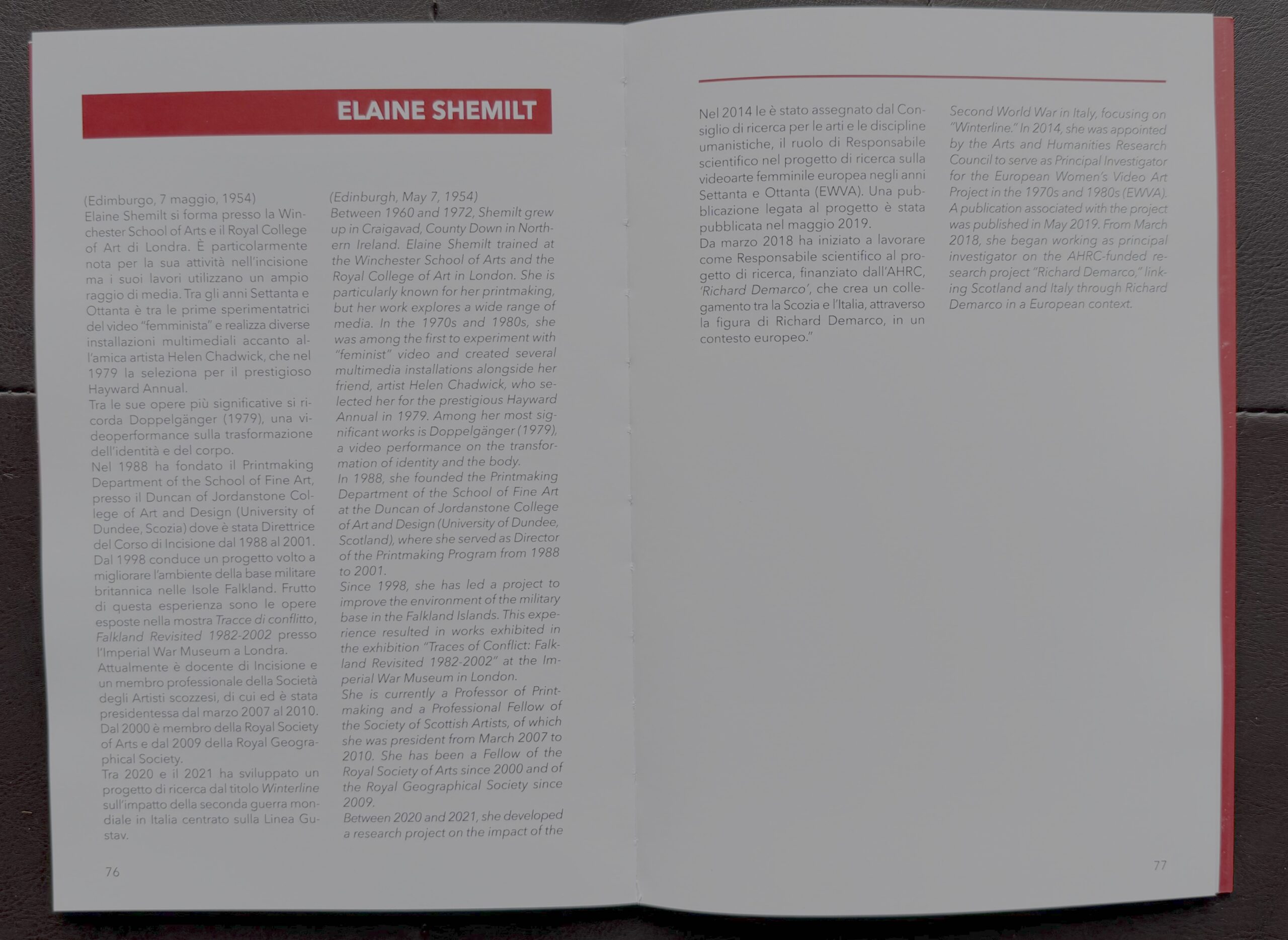
catalogue pages